Last updated
category
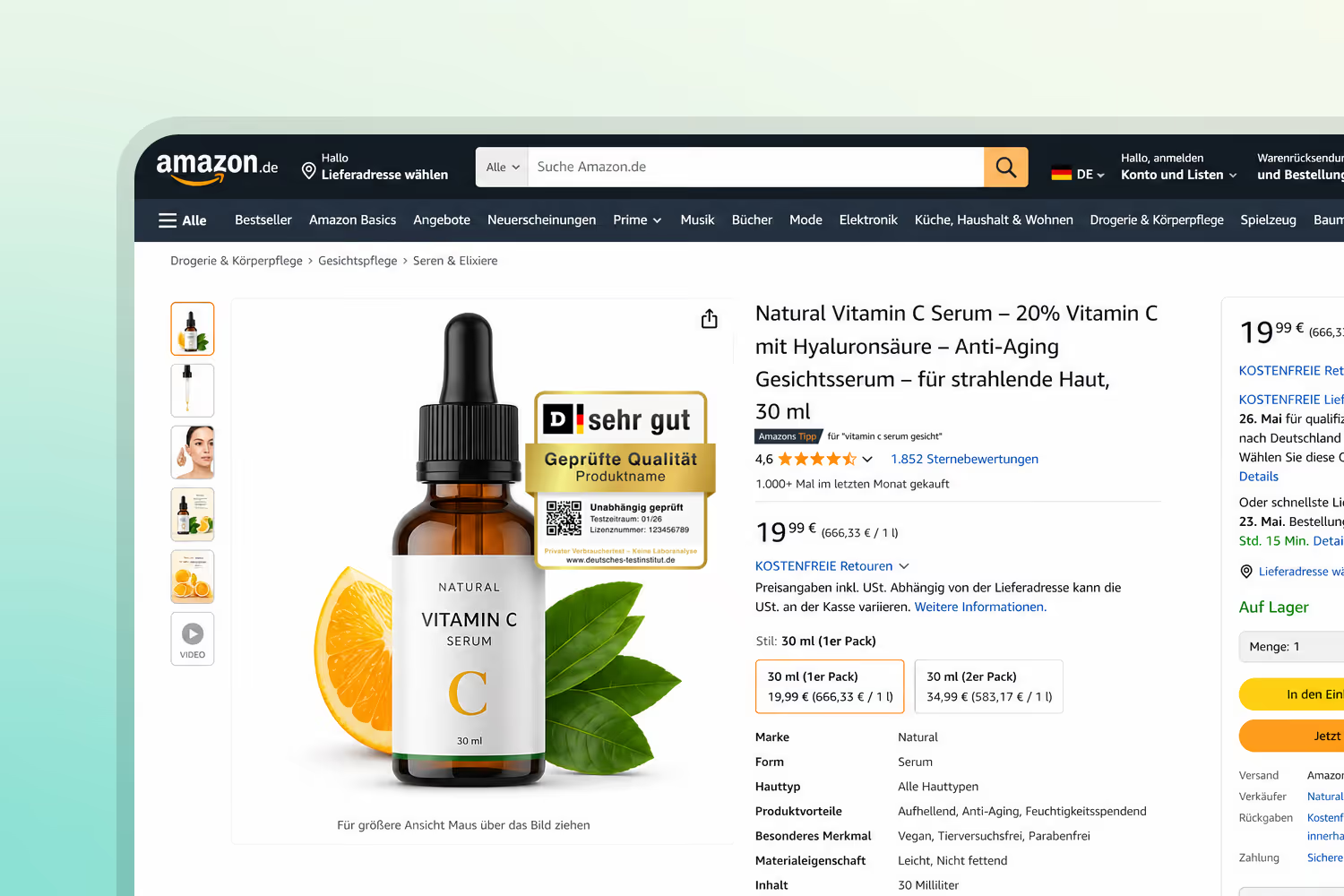
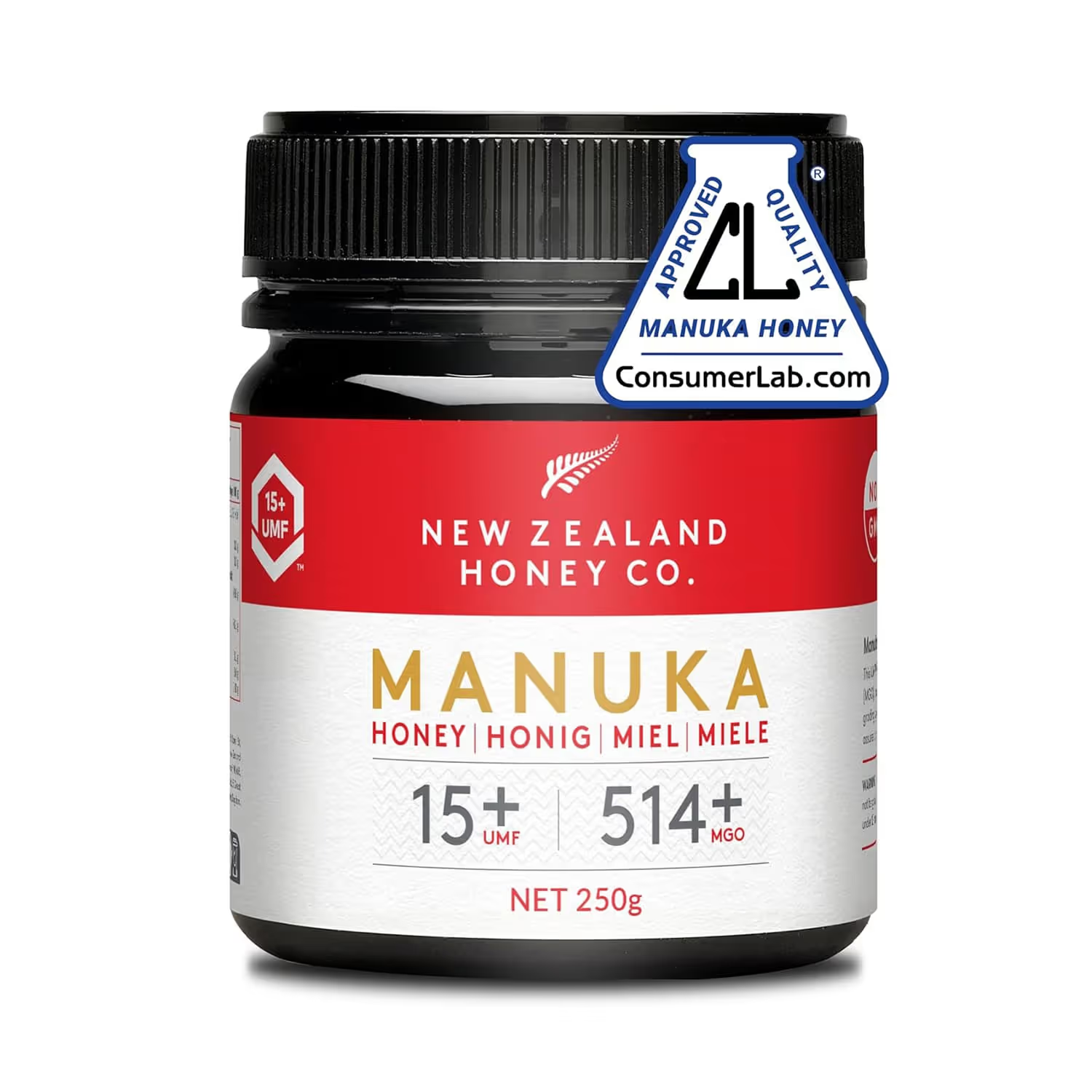
An Amazon test seal can give buyers additional guidance — especially when it is backed by a transparent test result, a clear reference page and a professional product listing.


Amazon is often the first place where consumers search for, compare and buy products. At the same time, sellers operate in a highly competitive environment: similar product images, similar prices, similar promises and often only a few seconds of attention.
In this situation, buyers do not make decisions based on rational criteria alone. In addition to price, delivery time and reviews, trust plays a central role. A product needs to explain quickly why it is a safe, suitable and reliable choice.
A test seal can support exactly this moment. It acts as a visual trust signal and shows buyers that the product was not only promoted by the seller or brand, but was also reviewed according to external criteria. What matters, however, is how clearly and transparently this signal is used.
A seal does not create its effect through design alone. It becomes truly convincing only when it is clear which product was tested, which procedure was used for the evaluation and where the underlying test result can be viewed.
A test seal can provide orientation. Especially for products where consumers cannot immediately assess quality themselves, an external reference can help reduce uncertainty.
This is particularly relevant for products with many comparable alternatives. When several offers look similar, a clearly documented test seal can make a difference. It creates an additional point of reference that buyers can use as guidance.
For sellers, a test seal is therefore not just a visual element within the listing. It can become part of the overall trust architecture — alongside product images, reviews, A+ content, clear benefits and transparent product communication.
One point remains essential: A test seal does not replace a good product. It cannot artificially create quality. However, it can make existing quality more visible and help buyers make a more informed decision.
Our classification: A test seal should always be clearly linked to the tested product, the test result and a verifiable reference page. Only then can a visual trust element become verifiable proof of quality.
A reference page is the place where consumers can review the test result. Ideally, a link or QR code leads directly to an official results page on which the product, test result, evaluation basis and relevant information are presented transparently.
Without such a reference, a seal remains a claim for many buyers. When the result can be checked, it becomes a verifiable trust signal.
This traceability is particularly important in e-commerce. Buyers cannot touch the product, test it themselves or fully assess whether product claims are reliable. A publicly accessible results page can help close part of this information gap.
This also creates an additional advantage for sellers: The test result is not only visible in the Amazon listing, but also provides an external, indexable and linkable basis. This can create relevance beyond Amazon itself.
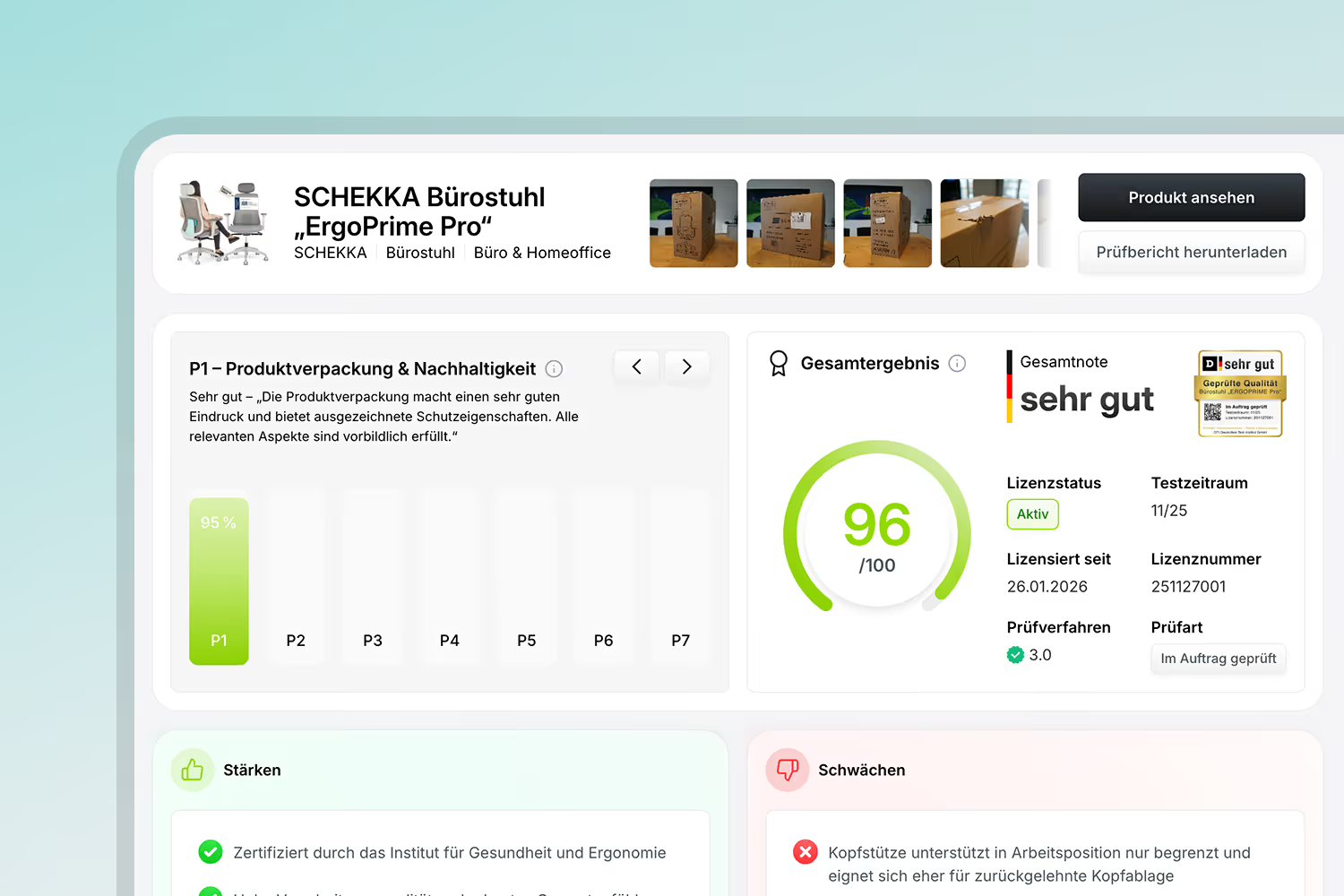
In the Amazon listing, a test seal should not be used casually or ambiguously. It should appear where buyers actively build trust: in product images, in A+ Content or in supplementary information graphics.
The integration is particularly effective when the seal is not shown in isolation, but is accompanied by a brief explanation. Buyers should be able to understand at a glance what was reviewed and where they can find further information.
A good product detail page should help customers find relevant information, answer their questions and make a purchasing decision; Amazon also recommends keeping listings concise, accurate and easy to understand. That is exactly why a test seal should be presented clearly, product-related and with a direct reference to the underlying result.
A possible representation can be:
It is important that there is no misleading transfer of the result. If only one specific variant has been tested, the result must not appear as if it automatically applies to all variants or to other products of the same brand.
A test seal has the strongest effect when the entire listing is professionally structured. Product images, titles, bullet points, A+ Content, reviews and price positioning should work together to create a coherent overall impression.
A good listing answers the most important buyer questions quickly:
A test seal can support this argument. However, it should not be seen as a substitute for clear product communication. If images are weak, benefits are unclear or the content appears incomplete, even a seal can only compensate for these gaps to a limited extent.
For this reason, the strongest effect can usually be expected when product quality, listing quality and verifiable trust signals come together. Amazon itself recommends improving product detail pages with strong titles, high-quality images, at least three bullet points, helpful descriptions, relevant search terms and A+ Content.
Test results can be relevant not only within Amazon. If a results page is publicly accessible, well structured and clearly organized in terms of content, it can also play a role in search queries outside of Amazon.
This applies, for example, to search queries such as:
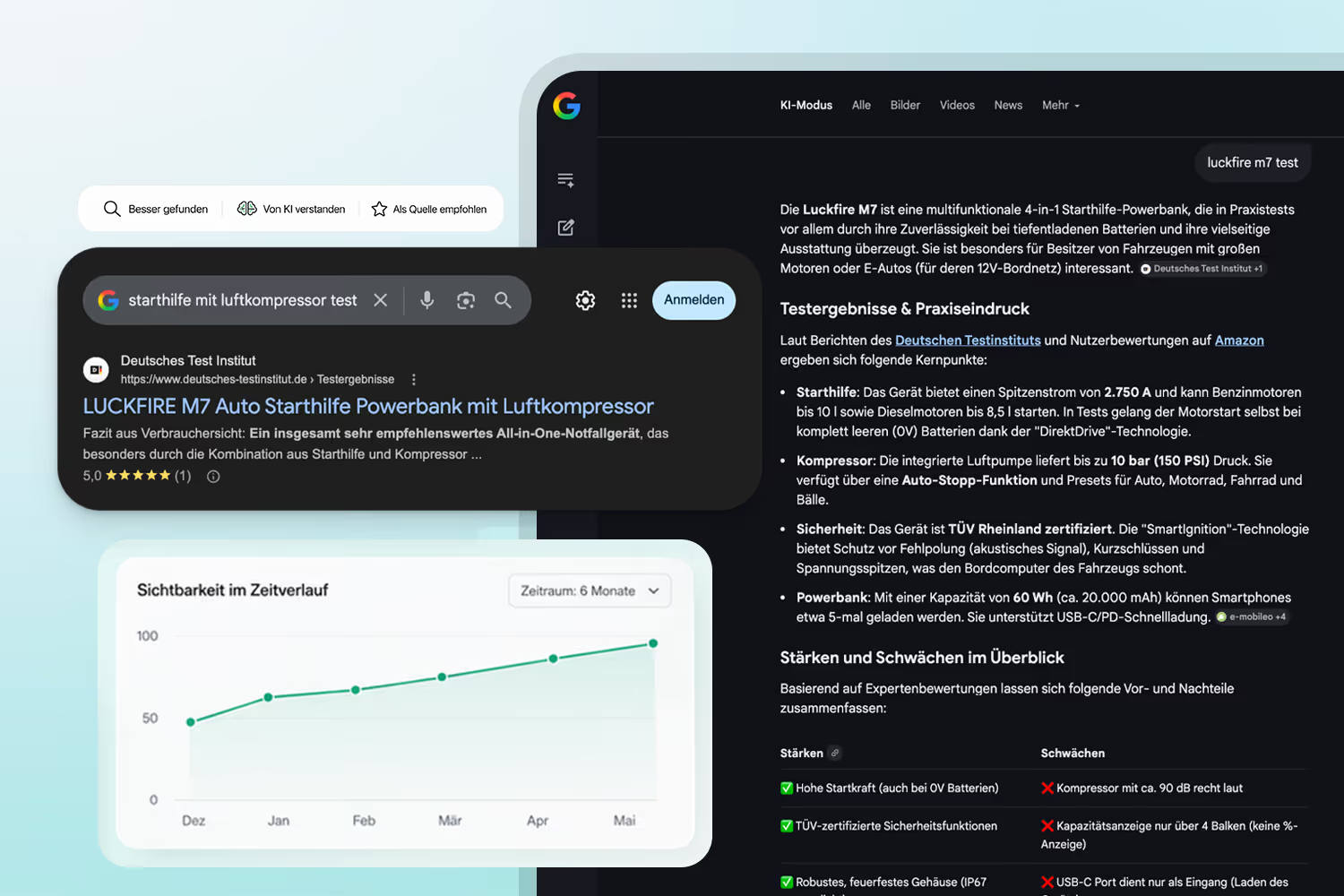
AI-supported search systems and response formats also require comprehensible, structured information in order to be able to classify products, brands and reviews. In return, a transparent results page provides significantly more substance than a pure advertising graphic.
This creates an additional benefit for retailers: The test result can be effective not only at the moment of the Amazon purchase decision, but also during external research before the purchase.
When using test seals, sellers should pay particular attention to clarity and traceability. The decisive factor is not to advertise with a seal as prominently as possible, but to use it correctly, transparently and in direct relation to the tested product.
These points are particularly important:
A test seal should create trust, not raise new questions. The clearer the presentation, the easier it is for consumers to classify the signal.
For companies, this care is also strategically relevant. Transparent use not only strengthens buyer perception, but also reduces the risk of misleading advertising.
Amazon test seals can be an effective trust signal. However, their strength does not lie in the visual effect alone, but in the clear combination of tested product, public reference page and transparent presentation of results.
For sellers, the greatest benefit arises when a test seal is embedded in a professional listing and the overall product communication is consistent. The seal can then help make quality more visible, reduce purchase doubts and provide additional guidance.
Deutsches Test Institut (DTI) therefore relies on transparent test results, clearly documented test logic and verifiable result pages. In this way, a seal is not just an advertising element, but verifiable proof of trust.



Make product quality visible — with verified results, an official reference page and a quality seal you can use in your marketing.