Last updated
category
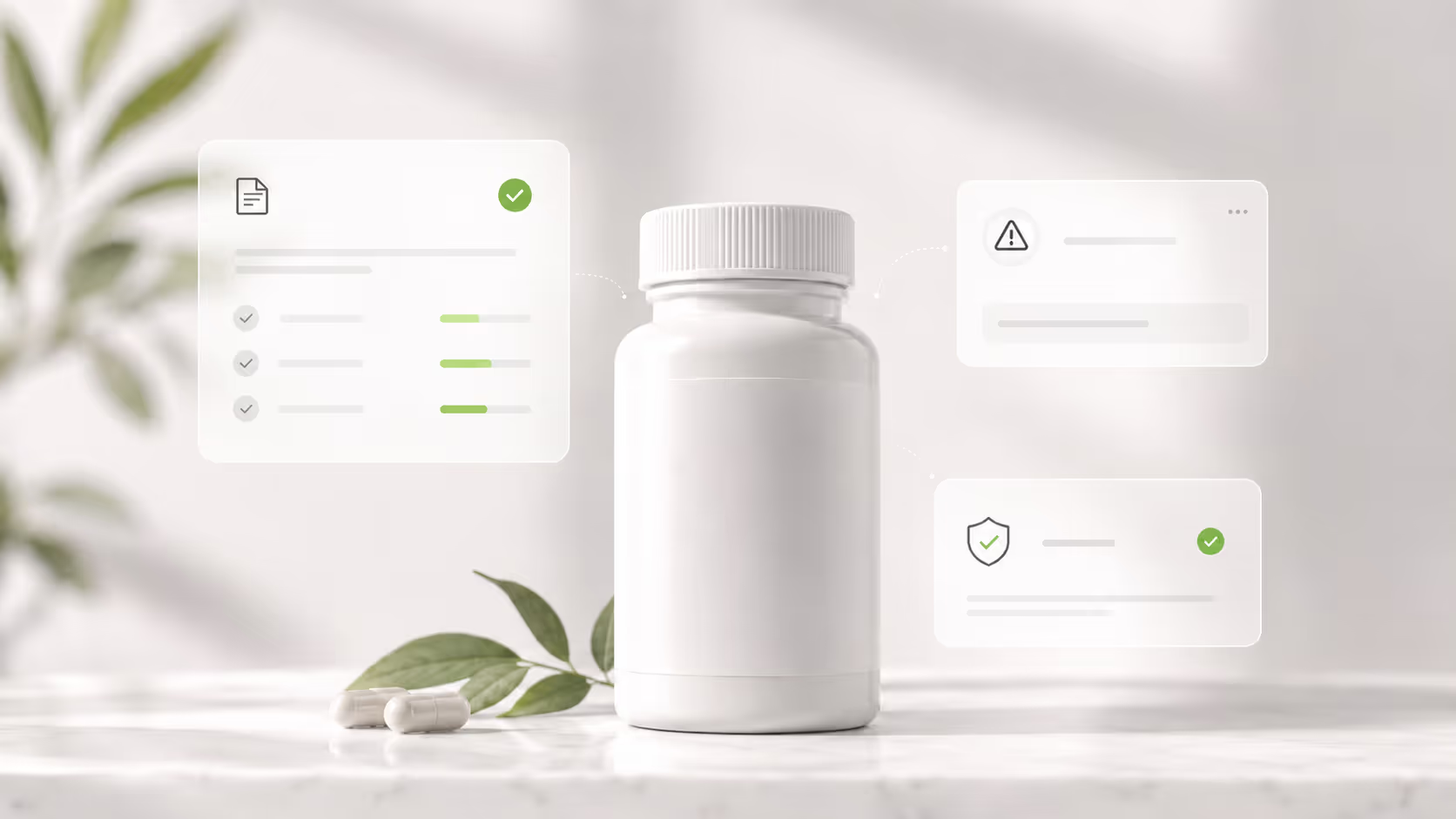
Food warnings show how important transparent information is for consumers. This article explains what official warning portals provide, where private consumer tests have their limits, and why foods, dietary supplements, and cosmetics must be assessed with particular care.


Food warnings show how important transparent information is for consumers. This article explains what official warning portals provide, where private consumer tests have their limits, and why foods, dietary supplements, and cosmetics must be assessed with particular care.
Consumers need to be able to trust products. However, with foods, dietary supplements, cosmetics, or products with direct body contact, looking only at packaging, design, or advertising claims is often not enough. What matters are understandable labelling, clear usage instructions, and traceable information.
This is precisely where DTI applies its consumer-oriented product tests. The assessment focuses on whether product information, labelling, application, and submitted documents can be understood and plausibly classified from a consumer perspective.
At the same time, the following applies: a private consumer test does not replace a laboratory analysis, a medical efficacy assessment, or an official safety evaluation. In the case of recalls and specific warnings, official sources such as lebensmittelwarnung.de remain authoritative.
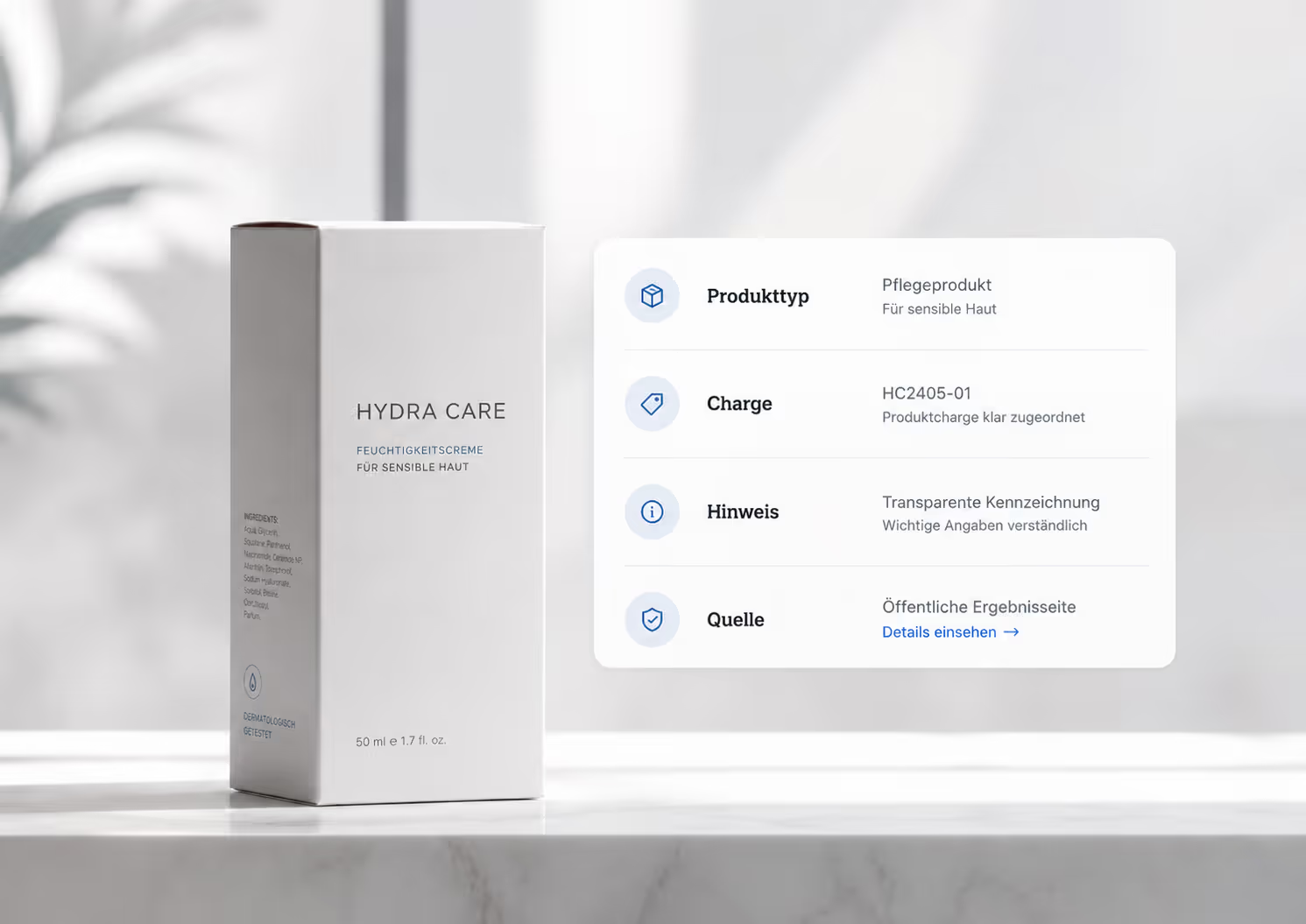
For consumers, it is important that product type, batch, labelling, and the source of the test result are clearly traceable.
Foods, dietary supplements, and cosmetics differ from many classic consumer products. While consumers can often assess for themselves whether the workmanship, function, or handling of a household item is convincing, this is much more difficult with sensitive product groups.
When making a purchase, consumers usually cannot verify for themselves whether a product is free from residues, whether a formulation matches the advertised claims, whether an analysis was carried out correctly from a technical perspective, or whether certain ingredients are actually present in the stated quality.
They therefore depend on product information being understandable, labelling being correct, and submitted evidence being recognizably linked to the specific product.
This is exactly why particularly careful classification is needed. Not through broad safety promises, but through traceable information:
In this context, transparency does not mean that every product is automatically safe, effective, or laboratory-tested. Transparency means that consumers can see which information is available, how it should be classified, and where the limits of a statement lie.
Careful classification is particularly important for dietary supplements. Dietary supplements are legally classified as foods. As a rule, there is no general pre-market approval procedure for them as there is for medicinal products.
Instead, dietary supplements must be notified in Germany to the Federal Office of Consumer Protection and Food Safety. However, this notification is not an approval and does not constitute a content-based assessment of the formulation.
Responsibility therefore initially lies with the food business operator. Manufacturers, retailers, or importers must ensure that a product is safe, correctly labelled, and compliant with food law requirements. Official food control authorities then monitor products on the market, for example on a sample basis, risk-oriented basis, or in response to specific irregularities.
For consumers, this means that a product may look professional, be cleanly packaged, and be marketed as high quality without having undergone a comprehensive independent content analysis before sale.
This makes traceable product information, correct labelling, and reliable external documents such as certificates of analysis or other testing documents all the more important.
A product test for dietary supplements can start precisely at this point: not with official marketability and not as a substitute for laboratory analysis, but with consumer-oriented classification. DTI can assess whether information is understandable, whether submitted documents plausibly correspond to the tested product, and whether product communication remains traceable for consumers.
Deutsches Test Institut (DTI) conducts consumer-oriented product tests. The focus is on criteria that truly matter to consumers in everyday life.
These include in particular:
For sensitive product groups, particular care is taken to determine which aspects can be assessed meaningfully and responsibly from a consumer perspective.
DTI therefore does not assess products in place of authorities, laboratories, or market surveillance bodies. The test begins where consumers need guidance before making a purchase: with comprehensibility, traceability, transparency, and practical classification.
For example, if a manufacturer provides a certificate of analysis, a data sheet, or another product-related document, DTI can assess whether this document can be classified in a way that is understandable for consumers. The decisive factor is not a new laboratory or scientific assessment of the document, but whether the information is understandable, plausible, and consistent with the packaging, online shop, instructions, or manufacturer communication.
What is not assessed, however, is whether laboratory values were technically collected correctly, whether a medical effect actually exists, or whether a product has been officially confirmed as marketable.
This distinction is deliberate. It ensures that a DTI test result remains precise and does not promise more than was actually assessed.
Especially with sensitive product groups, transparency about the limits of the testing procedure is particularly important.
Deutsches Test Institut (DTI) conducts consumer-oriented product tests. These tests are not an official safety inspection, not a laboratory approval, and not an official conformity assessment.
Specifically, this means:
A DTI product test is therefore not an official safety certificate and not a laboratory approval. It is a consumer-oriented assessment of selected criteria with clearly defined limits.
This clarity is essential. Especially with sensitive product groups, a test seal must not create the impression that laboratory values, efficacy claims, or official marketability have been confirmed by DTI if this was not part of the assessment.
For foods, dietary supplements, and cosmetics, external evidence can play an important role. This may include laboratory reports, certificates of analysis, batch-related documents, conformity documents, or other manufacturer and testing documents.
Such documents can be helpful for consumers if they are understandable, traceable, and clearly product-related.
External evidence only provides orientation when it can be clearly assigned to the product, variant, or batch.
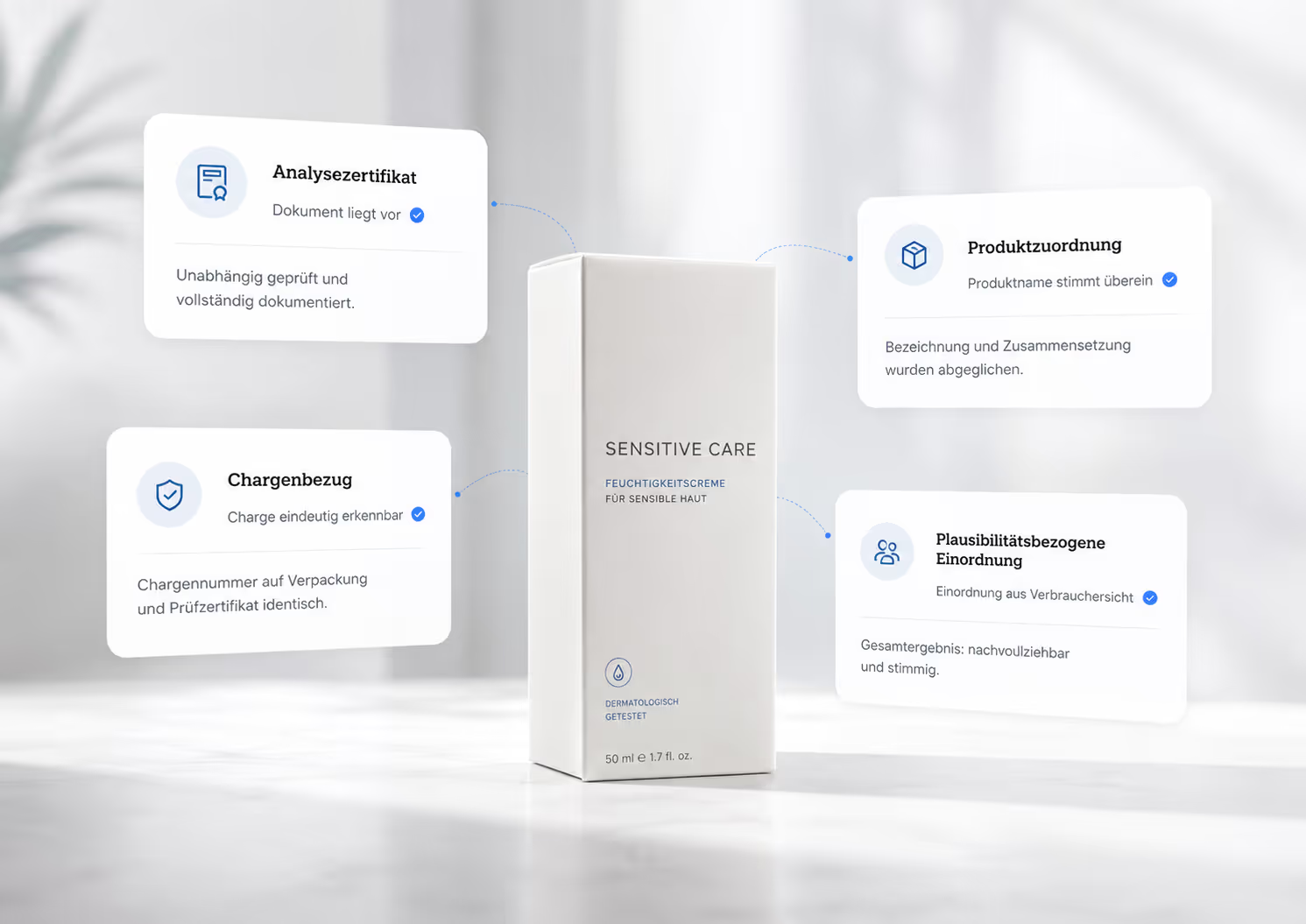
DTI may take these documents into account as part of a test. However, the purpose is not to confirm the scientific or laboratory correctness of these documents itself.
What matters is the consumer-oriented assessment of plausibility and assignment:
The content accuracy, completeness, and timeliness of such documents remain the responsibility of the manufacturer or the issuing bodies.
For consumers, it is not only important whether a document exists, but whether it can be classified in a traceable way. Especially with certificates of analysis or batch-related evidence, orientation only arises when it is clear what the evidence refers to and what statement it actually supports.
When it comes to specific recalls, warnings, or official consumer information, official sources are authoritative. One central platform is lebensmittelwarnung.de.
There, the federal government and the German federal states provide information on public recalls and other relevant notifications. The portal covers not only foods, but also cosmetic products, consumer goods, tattooing products, and baby and children’s products.
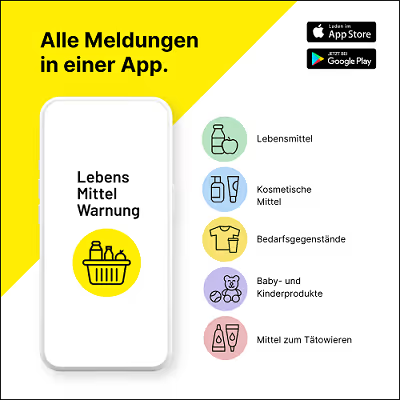
For consumers, this is important because many relevant risks are not visible at the time of purchase. A product can look high quality, be cleanly packaged, and be professionally marketed – and still be affected by a notification that can only be clearly classified using specific details such as batch, best-before date, item number, or reason for warning.
This shows that consumer information does not end with the product packaging. Especially with sensitive product groups, reliable and publicly accessible information is needed when a product is recalled or when a specific warning exists.
Put simply: lebensmittelwarnung.de provides information about specific warnings and recalls. A consumer-oriented product test, on the other hand, helps consumers better classify product information, labelling, and evidence before making a purchase decision.
On lebensmittelwarnung.de, consumers can classify notifications by product type, federal state, time period, and reason.
Possible reasons for notification include, among others:
This makes it clear that consumer protection is not only about visible defects. Many relevant risks or deviations can hardly be recognized at the time of purchase.
Examples include undeclared allergens, affected batches, residues, foreign bodies, or product information that may mislead consumers.
The number of published recalls shows that consumer information is not a theoretical issue. Recalls and warnings make visible how important traceability, clear product information, and fast public communication are in serious cases.
Such notifications should not generally unsettle consumers. Rather, they show that functioning information systems are necessary.
The more sensitive a product group is, the more important the interaction between manufacturer responsibility, official information, external evidence, and understandable consumer communication becomes.
For testing bodies such as DTI, this results in a clear standard: classify products from a consumer perspective without mixing up the roles of authorities or laboratories.
It is precisely this separation that makes an assessment more robust. A consumer test can provide orientation when it is clearly explained what was tested.
A consumer-oriented product test and an official warning notification serve different purposes.
A warning notification provides information about a specific issue: an affected product, a possible risk, a recall, or a recommended course of action.
A product test starts earlier and takes a broader view. It looks at how a product presents itself from a consumer perspective, whether the information is understandable, whether the use of the product is traceable, and whether submitted documents can be plausibly assigned to the product.
Both can help consumers – but in different ways.
Warning portals are important when it comes to specific risks, recalls, and official information. Consumer tests are helpful when consumers want to better understand and classify a product before making a purchase.
The key point is that these two roles must not be mixed.
For consumers, it is worth taking a conscious look at several levels.
A test seal or test result can provide orientation if it is clear which product was tested, according to which procedure the assessment was carried out, and where the result can be verified.
With sensitive product groups, consumers should also pay attention to whether the manufacturer communicates transparently about ingredients, usage instructions, warnings, evidence, or certificates.
The key question is whether the information is specific. General statements such as “tested quality”, “high-quality ingredients”, or “scientifically proven” only help consumers if it is explained in a traceable way what these statements refer to.
For specific recalls, warnings, or safety issues, consumers should always use official sources. A consumer test does not replace these sources. It can usefully complement them if it is clearly explained which aspects were tested and where the limits of the test lie.
Clear classification is also important for reputable manufacturers. Anyone who develops good products should have no interest in creating trust through exaggerated statements.
In the long term, what convinces consumers is a combination of good product quality, proper labelling, traceable evidence, and honest communication.
Especially with sensitive product groups, transparency is a quality feature. Consumers notice whether a manufacturer provides specific information or avoids doing so. They recognize whether claims are traceable or remain vague. And they can better assess whether a test result is properly documented or merely used as an advertising graphic.
For DTI, this means that a seal must not be viewed in isolation. What matters are the source page, the testing procedure, and clear communication about what was tested.
A strong test result is therefore not only a trust signal. It is also a documented form of consumer information – provided it remains transparent which criteria were tested and which were not.
Sensitive product groups require special care because consumers cannot verify many relevant characteristics themselves. Especially with foods, dietary supplements, and cosmetics, clear labelling, understandable product information, and traceable documents are therefore essential.
Deutsches Test Institut (DTI) provides orientation here from a consumer perspective. It does not test laboratory values, medical effects, or official safety issues, but consumer-relevant criteria such as labelling, application, transparency, and traceable product communication.
Official warning portals such as lebensmittelwarnung.de remain authoritative for recalls and specific risks. A consumer test does not replace this information – it complements it where consumers want to better understand and classify products before making a purchase.
Trust is created when test seals, evidence, warning information, and responsibilities remain clearly separated.



Make product quality visible — with verified results, an official reference page and a quality seal you can use in your marketing.